lightupautism@gmail.com
 0422021469
About Autism
Commonly referred to as Autism Spectrum Disorder (ASD) it is characterised by impaired social interaction and communication, as well as a tendency to engage in restricted and repetitive behaviours.
Being a “spectrum disorder” means that different children are affected to varying degrees. This may result in some children being less affected with relatively mild challenges, while others could more severely affected where repetitive behaviour and lack of spoken language impact on everyday life.
We know through data that 1 in every 30 people have autism in Australia. And, while ASD is a life-long condition, interventions and therapies can reduce symptoms and increase skills and abilities.
Although it is best to begin an intervention as soon as possible, the benefits of therapy can continue throughout a person’s life.
Components for effective intervention programs for students with ASD are:
- systematic instruction
- functional objectives and meaningful activities
- functional communication systems
- effective motivational systems and a system for behaviour intervention.
When a child is diagnosed with autism or other learning challenges, it’s natural to feel overwhelmed. When a student is displaying challenging behaviour in the class, it’s difficult to address individual needs. But every child future is not set in stone, and every child with autism deserves our support and skill development to make their future brighter.
Every parent wants the best for their child. So does every educator.
That’s why we support children through our positive support program as a comprehensive model of care that makes life better for children and their families.
What is our positive support programs:
Our positive support programs is a safe and effective treatment and therapy for autism. This scientifically validated approach focusses on understanding behaviour and how it is affected by the environment.
- “ interventions are geared towards achieving socially- important goals and “behaviour” refer to actions and skills.
- “Environment” means any physical or social influence that might change or be changed by someone’s behaviour.
- Since the 1960s, therapists have been applying behaviour analysis to help children with autism and related developmental disorders.
- Through decades of research, there has been many techniques developed for increasing useful behaviours and reducing ones which may cause harm or interfere with learning.
Our positive support program improves learning and social interaction
- It focuses on the principles which explain how learning takes place.
- Uses Positive reinforcement as a key principle.
- When a behaviour is followed by some sort of reward, the behaviour is more likely to be repeated.
- Anything that positively impacts a child with autism are explored and modelled to help form long lasting habits.
- We use techniques and principles to bring about meaningful and positive change in behaviour.
A Qualified psychologist works with students and their families to manage challenging behaviours, encourage positive behaviours and build skills to use in the classroom and in life.
- They can be used in structured situations like classroom lessons as well as in everyday situations.
- All sessions involve one-on-one interaction with a trained aide and the student.
- Our program uses principles and techniques to foster basic skills such as looking, listening and imitating, as well as complex skills such as reading, conversing and understanding another person’s perspective.
Parents feedback:
“We are so incredibly grateful to have the support of Light Up Autism Foundation for our 2 children in our mainstream school. They both have specific programs tailored to their individual special needs. They are given basic goals to work towards to help them progress and grow at their own speed. Our kids really struggle to learn in the chaotic classroom environment, so having that regular one on one time with their trained aide has been vital to their development. They would not be where they are today without the positive support program or the ongoing support of the Light Up Autism Foundation.”
Monique Cain
These techniques can be used in structured situations such as a classroom lesson as well as in everyday situations. Some positive support sessions involve one-on-one interaction with a psychologist and the student. Our positive support programs practises and techniques can foster basic skills such as looking, listening and imitating, as well as complex skills such as reading, conversing and understanding another person’s perspective.
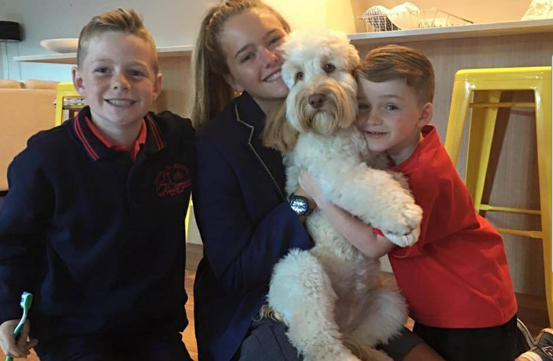
How can our positive support programs in schools help?
Using our positive support approach we will help educators, integration aids focus on addressing the needs and challenges of children with autism.
Through the positive support program in the classroom settings teachers can improve the learning style of each child through:
- addressing or preventing challenging behaviours
- increasing positive behaviours
- providing structure and routine
- building skills
- enhancing motivation
- focusing on achieving independence
principles and methods effectively applied within an educational setting can lead to:
- Accurate assessment of skill levels in all areas of functioning
- Individualised curriculum for systematic skill development in all areas (play, motor skills, communication, speech, behaviour, academic skills, and social interaction) focussing on:
-
- What to teach
- Why specific goals are targeted
- How to teach and measure learning (data collection and analysis)
- When to generalize skills
- Where to go next (next steps)
- Detailed assessment and remediation of challenging behaviours (including self‐stimulatory, self-injurious or aggressive behaviours)
- Generalisation of skills and independent learning
How can my school or family access our positive support program ?
Light Up Autism Foundation have extensive experience facilitating the training of teachers and education staff to support them in delivering a positive support program. If you need to talk to someone about accessing these services or financial assistance and guidance for your family or school, we’d love to have that conversation.
To explore how we can best help get in touch today Contact Us
When a school uses our positive support program children with autism shine.